Enterprise GenAI: From POC to Production
Why most POCs fail and what to do about it - a practitioner's guide to moving enterprise GenAI from demo to real production deployment.

AI in Supply Chain: How Predictive Models Are Replacing Just-in-Time
In 2021, I was working on growth at Honasa Consumer - the parent company of Mamaearth - at a time when the D2C supply chain

FDA SaMD Guidance Explained: What Every Life Sciences Product Manager Needs to Know
If you're building AI products in life sciences, you will eventually hit a three-letter acronym that determines whether your product ships in months

Life Sciences & Healthcare AI PM Fundamentals
Everything I wish I knew when I started in Life Sciences & Healthcare AI product management - from the regulatory basics to building your first AI product spec.

The ROI of AI: How to Build a Business Case Your CFO Will Approve
Most AI business cases fail the CFO review because they overestimate benefits, underestimate costs, and ignore risk. Here is the framework I use to build business cases that actually get approved.

How to Write a PRD for an AI Feature (Template Included)
The first AI PRD I ever wrote was a disaster. I used the same template I had for growth features at Mamaearth - user story,

Mental Models for AI Product Decisions: When to Ship vs When to Wait
The most consequential decision I make as an AI PM is not which model to use or how to structure the evaluation pipeline. It is
Ethics and Responsible AI: A PM's Practical Guide
Responsible AI for PMs is not an ethics lecture. It's a set of practical decisions that affect whether your product is trusted, adopted, and sustainable in regulated environments. Here's how to embed responsible AI practices into your actual product process.
Defining MVP for AI Products: Less Is Different
The classic MVP framework - build the smallest thing that tests the riskiest assumption - breaks for AI products because the model quality is part of the product. A 60% accurate AI is not a minimal viable version of a 90% accurate AI. It's a different product that might create different...

Go-to-Market Strategy for AI Products
AI products have a trust problem that traditional software doesn't. Your GTM strategy has to solve for skepticism, unclear ROI timelines, and buyers who have already been burned by AI hype. Here's how to design a GTM motion that actually converts.
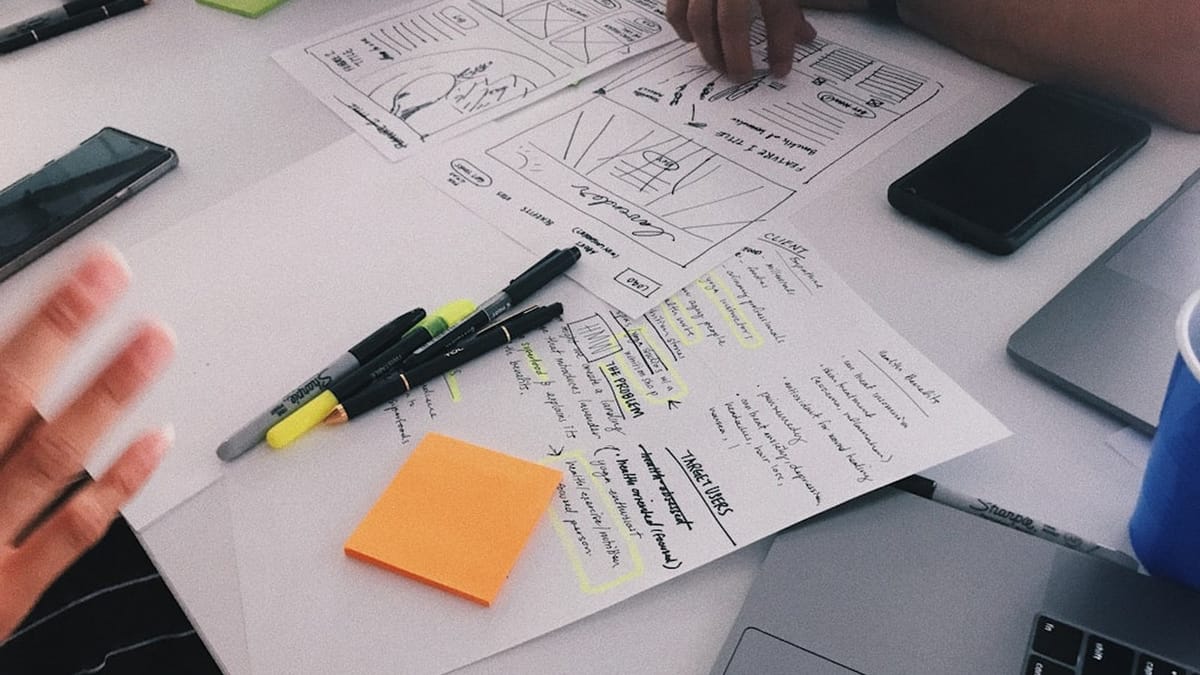
Building Cross-Functional AI Product Teams
AI products fail more often because of team dynamics than technical capability. Data scientists who can't communicate uncertainty to stakeholders, engineers who won't push back on infeasible ML requirements, PMs who don't understand what a model can't do. Here's how to build teams that ...

The AI Product Manager's Toolkit: 10 Frameworks That Work Across Industries
After building AI products across healthcare, edtech, and CPG, I've distilled the frameworks that actually survive contact with real organizations. These 10 tools work regardless of industry — because the hard problems in AI product management are fundamentally the same.

RICE for AI: Modified Prioritization Framework
Standard RICE doesn't work for AI products because 'confidence' means something different when a model is involved. Here's the modified version I use across healthcare, fintech, and consumer AI.

User Research for AI Products: What Changes
Standard user research methods mostly apply to AI products, but several things are different enough to matter: users can't articulate what they want from AI outputs they've never seen, trust is dynamic not static, and prototype testing with static mockups misses the core AI interaction.
AI Product Metrics That Actually Matter
Accuracy is not a product metric. It tells you how your model performs on a test set. It doesn't tell you whether users trust it, whether it changes behavior, or whether it creates business value. Here's the metric stack I actually use.